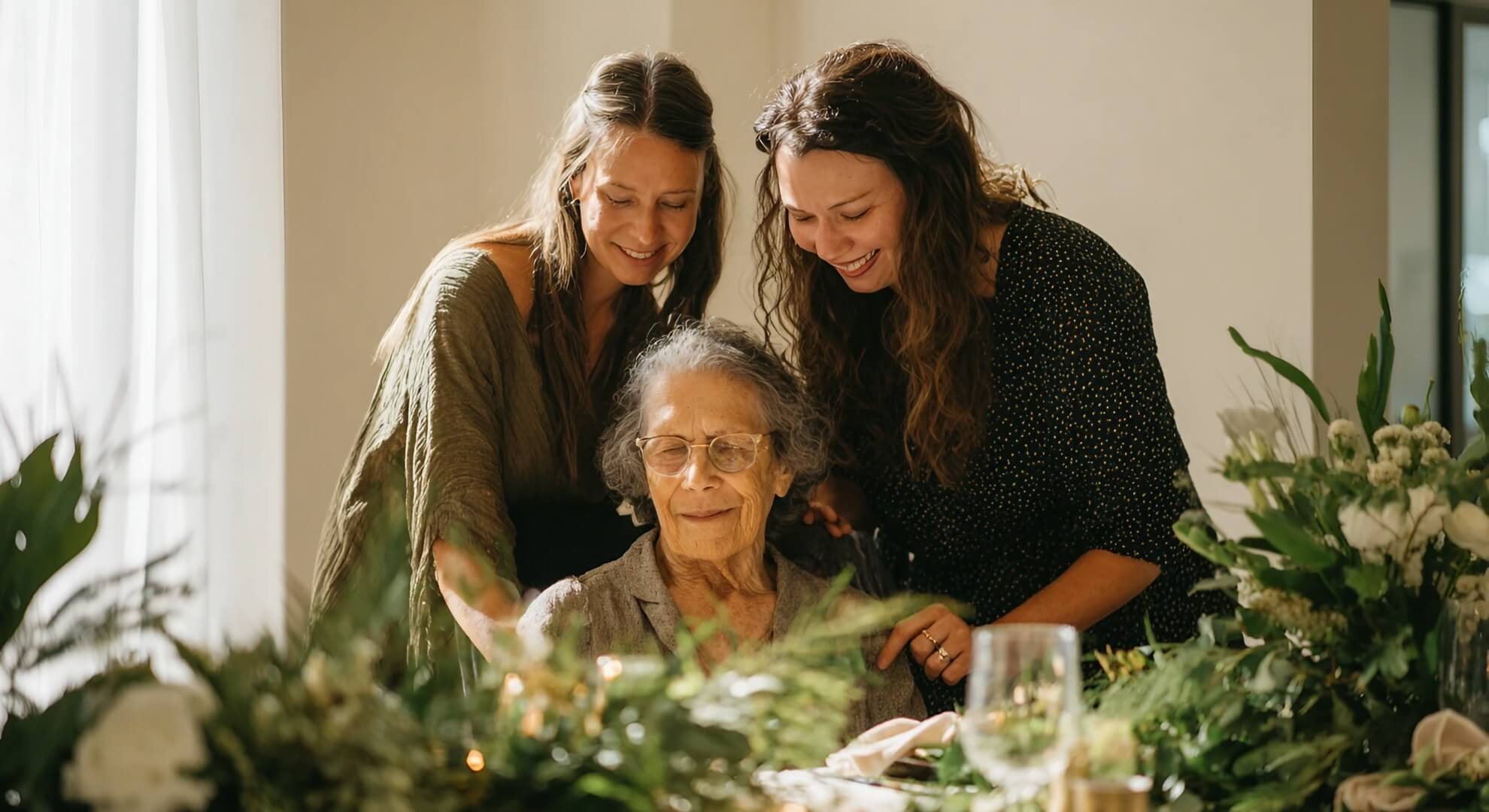


There is a profound threshold that we all must eventually cross, a transition that society often shrouds in clinical silence and quiet apprehension. Yet, a quiet revolution is taking place at the bedsides of the dying, led by those who recognize that the end of life is not merely a medical event, but a deeply spiritual and communal milestone.
The concept of the living funeral—a gathering where a dying individual is celebrated by their loved ones while they are still able to participate—reclaims this territory. It is a radical assertion of love, insisting that the most beautiful tributes should be spoken to the living rather than whispered over the departed.
Facilitated by a death doula as a compassionate companion, this celebration frames mortality not as an abrupt ending, but as an opportunity for ultimate connection.
DISCLOSURE: This post contains affiliate links. When you purchase through these links, I may receive a small commission that helps me continue to provide these resources for your journey, at no extra cost to you. I only recommend resources I believe in.
The Historical Context of Conscious Farewells
For much of human history, passing away was an intimately communal affair, deeply woven into the fabric of daily existence. Relatives, neighbors, and friends gathered around the deathbed to offer prayers, share memories, and bear witness to the transition.
In the modern era, we have largely outsourced this sacred duty to institutions, distancing ourselves from the visceral reality of our shared fate.
The living funeral is a return to those ancestral roots, reconstructing the village around the dying individual. It acknowledges that human beings require communal acknowledgement to navigate the monumental rites of passage that define our existence.1
The Power of the Spoken Word
Often, the most magnificent testaments to a person are delivered when they can no longer hear them. We stand at podiums in dark clothing, offering our deepest gratitude and articulating the precise ways a soul has altered the trajectory of our own lives.
A living celebration subverts this tragic irony by delivering the eulogy directly to the heart of the honoree. The psychological relief experienced by the dying person when they hear these affirmations is immense.
They do not have to depart this world wondering if their life held meaning, or if their presence mattered; the evidence is spoken directly into their ears, woven into laughter and tears.
Transforming Fear into Communion
The anticipation of death frequently breeds a paralyzing isolation, both for the individual facing the end and for the family standing on the shore, watching their loved one drift away. This isolation is born from a deeply ingrained cultural terror of mortality, which often causes us to avert our gaze from the dying.2
A living funeral demands that we step into the center of that discomfort and dismantle the fear through the sheer force of human communion.
Breaking bread, sharing music, and embracing one another in the shadow of impending loss, the attendees dissolve the walls of denial. The event becomes a sanctuary where grief is allowed to coexist with profound, transcendent joy.
The Atmosphere of the Gathering
To imagine a living funeral is to envision an atmosphere that defies the traditional aesthetics of mourning. It is typically an environment filled with warmth, tailored intimately to the personality and passions of the guest of honor.
The space might be filled with the sounds of a favorite jazz record, the scent of a beloved family recipe, or the bright colors of a treasured garden. There are toasts raised with champagne or cups of tea, and stories are exchanged that prompt raucous laughter followed closely by necessary tears.
The celebration holds space for the full spectrum of human emotion, validating the sorrow of parting while simultaneously illuminating the magnificent triumph of having lived at all.
The Approach of the Death Doula
Orchestrating such a deeply emotional event requires a steady, grounded presence to hold the emotional weight for the family. This specific grace is the sacred work of the death doula.
Operating from a place of deep service, the death doula does not impose a personal agenda; rather, they gently facilitate the difficult conversations required to plan the gathering, ensuring that the specific wishes of the dying person remain paramount.
During the actual event, the death doula absorbs all logistical burdens and tends to the complex emotional currents shifting within the room. This quiet, steadfast vigilance allows the family members to release their worldly anxieties and simply exist in a state of pure, uninterrupted presence with their beloved.
Healing the Anticipatory Grief
Long before the final breath is drawn, families endure the heavy burden of anticipatory grief—the mourning of a future that will never come to pass and the slow, agonizing realization of a changing reality.
The living funeral provides a designated vessel for this specific, often unacknowledged form of sorrow. Through gathering purposefully to honor the transition, the community validates the complex emotions brewing within the family unit.
The event provides a structured environment where tears are not hidden away in private corners, but shared and held collectively. This shared vulnerability softens the harsh edges of anticipatory grief, transforming quiet despair into collective resilience.
The Gift of Agency
One of the most devastating aspects of terminal illness is the systematic stripping away of personal autonomy. The living funeral restores a profound sense of agency to the dying individual during a time when so much else is entirely out of their control.
They are granted the authority to curate their final social footprint, choosing who they wish to see, what music they wish to hear, and exactly what tone their farewell will strike.
This empowerment allows the individual to transition from a passive patient back into the active author of their own life story, granting them dignity and grace in their final chapter.
The Sustaining Afterglow
The impact of this celebration does not dissipate when the guests return to their homes or when the honored individual finally passes away. Instead, the memories forged during the living funeral become a crucial lifeline for the bereaved in the months and years that follow.
When the inevitable wave of post-loss grief crashes over the family, they are anchored by the vibrant recollection of their loved one smiling, receiving gratitude, and radiating love.3
The living funeral becomes a luminous touchstone, a permanent emotional artifact that proves the farewell was as beautiful and deliberate as the life that preceded it.
A Final Act of Grace
To throw a living funeral is to host the most meaningful party you will ever attend, a gathering that demands tremendous courage and yields unparalleled spiritual rewards. It requires us to look directly into the eyes of our own mortality and choose celebration over retreat.
For the dying, it is the ultimate culmination of a life well-lived—a final, deliberate act of grace that weaves their legacy into the hearts of their community.
In the end, we walk each other to the edge of the known world, our hands joined, our voices lifted in a chorus of profound and everlasting gratitude.
It is a profound observation that while modern culture encourages us to conceal our deepest sorrows, immense healing is uncovered when we illuminate our final transitions with shared love.
How might your own family or community be transformed by embracing the practice of a living funeral, and what heartfelt words would you most wish to hear or speak before the end?
References:
- Van Gennep, Arnold. “The Rites of Passage.” A foundational anthropological text detailing how communal ceremonies help individuals transition across the critical thresholds of human existence. ↩︎
- Becker, Ernest. “The Denial of Death.” A Pulitzer Prize-winning psychological and philosophical study that explores how the fear of mortality drives human behavior and cultural constructs. ↩︎
- Moore, Thomas. “Care of the Soul.” A deeply contemplative work that encourages nurturing the spiritual and emotional depths of everyday life, particularly during times of profound transition. ↩︎
Leave a Reply