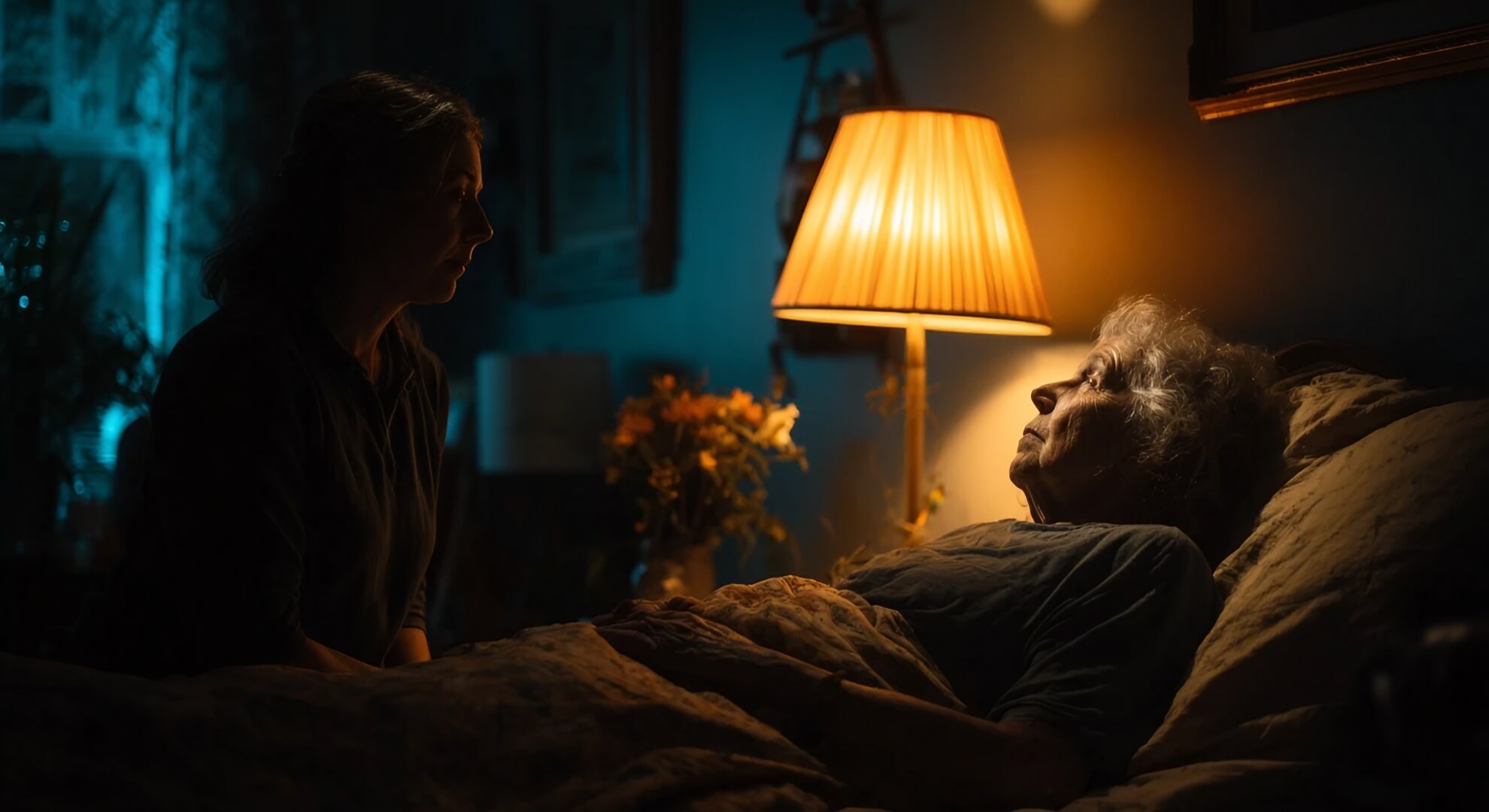


In the deep recesses of the human psyche, there resides a fear more potent than the apprehension of physical pain or the cessation of existence. It is the primal fear of abandonment in our final hour. We are social creatures, biologically wired for connection from our first inhalation to our last exhalation.
The prospect of facing the great transition in an empty room, surrounded only by the sterile hum of machinery and the cold indifference of clinical monitors, strikes a dissonant chord in our soul.
This anxiety is not a sign of weakness; it is a profound affirmation of our humanity. It is a cellular acknowledgment that we were never meant to walk this path in isolation.
Validating this fear, rather than dismissing it, begins to dismantle its power, allowing us to prepare for a departure that honors the inherent sanctity of our lives.1
DISCLOSURE: This post contains affiliate links. When you purchase through these links, I may receive a small commission that helps me continue to provide these resources for your journey, at no extra cost to you. I only recommend resources I believe in.
The Unintended Isolation of Modern Care
Our modern medical systems are miraculous in their ability to prolong life, yet they are often ill-equipped to honor the emotional nuance of death. Hospitals and care facilities are bustling hubs of clinical activity, designed to cure rather than to comfort the spirit, and they can be profoundly lonely places for the dying.
Nurses and doctors, driven by noble intent, are often constrained by the relentless demands of efficiency and heavy caseloads. Consequently, a patient may spend hours staring at a beige ceiling, waiting for a fleeting check of vital signs.
Furthermore, family structures have fractured and shifted; loved ones often live across oceans or are tethered by the demands of their own lives, making it physically impossible for them to maintain a continuous bedside presence. This gap between the deep desire for companionship and the harsh reality of isolation is where suffering quietly takes root.
A Covenant of Unbroken Presence
The Vigil Plan answers this modern dilemma with an ancient remedy: the guaranteed presence of a witness. It is a contractual agreement that transcends the transactional nature of typical service, elevating care to the level of a covenant.
This agreement states that when the active phase of dying begins—whether that duration is measured in quiet hours or restless days—a trained death doula will be physically present at the bedside. This is not medical oversight; it is soulful companionship.
It ensures that the atmosphere of the room remains human, soft, and attentive.
Formalizing this arrangement in advance transforms a vague hope that “someone might be there” into a concrete certainty, allowing the individual to release the heavy burden of anxiety regarding potential solitude long before the end arrives.
The Sustained Rhythm of Watchfulness
To ensure unbroken companionship, the Vigil Plan utilizes a carefully coordinated rotation of compassionate care. It is physically impossible for a single family member to remain awake and alert at a bedside for forty-eight or seventy-two hours without succumbing to the crushing weight of exhaustion.
The vigil model employs a team approach, where death doulas work in shifts to maintain a vigilant, fresh, and attentive presence twenty-four hours a day. This relay of care ensures that there is never a lapse in attention.
When the dying person wakes at three in the morning, they are met not with darkness, but with a kind face and a gentle voice. It creates a seamless container of safety, ensuring that every shift in breathing, every subtle change in temperature, and every momentary grimace is noticed and tended to with grace.
Curating a Sanctuary of Comfort
The dying process is a deeply sensory experience, even as the connection to the external world fades. It is widely understood that hearing is often the last sense to recede, and the skin remains hungry for touch until the end.
The death doula acting as the vigil keeper curates the sensory environment to align precisely with the dying person’s wishes. This might involve reading cherished poetry aloud, playing a specific playlist of calming cello music, or simply offering the reassurance of a human voice saying, “You are safe; you are loved; I am here.”
Touch, too, becomes a primary language of comfort when words fail. A hand held with steady warmth, a brow wiped with a cool cloth, or a shoulder steadied can communicate safety more profoundly than any medical intervention. This attention to the sensory landscape turns a clinical room into a sacred space.
The Gift of Exoneration for the Beloved
For distant relatives or exhausted family members, the Vigil Plan offers a profound form of absolution. The guilt of not being able to be present at the exact moment of death is a form of moral injury that can haunt the bereaved for years.
Knowing that a trained, compassionate proxy is sitting with their loved one allows families to rest, to travel, or simply to step out of the room to breathe without the paralyzing fear that their loved one will die alone.
It allows a daughter to go home and sleep, knowing her father is being read to. It allows a son to drive safely to the hospice facility without panic.
Alleviating the burden of continuous monitoring restores the family’s energy, allowing them to be present as loving relatives rather than exhausted caregivers.
The Sacred Act of Bearing Witness
There is a profound psychological need to be witnessed in our final transition. As noted by the philosopher Ernest Becker, the terror of death is often linked to the fear of insignificance.2
To have another human being fully present, watching over us with reverence, affirms the value of the life that is concluding.
The death doula bears witness to the labor of dying, honoring the struggle and the release. This act of witnessing validates the person’s existence; it is a silent affirmation that this specific life, and this specific death, matters deeply.
In the quiet hours of the night, the death doula serves as a bridge between the physical world and whatever lies beyond, anchoring the dying person in a shared human experience until the very last moment.
Harmonizing Medical Science with Human Soul
The medical team focuses on the biology—managing pain, regulating symptoms, and ensuring physiological comfort, while the Vigil Plan focuses on the person inhabiting that biology.
These two models of care are not competitive; they are beautifully complementary. While the nurse adjusts the morphine drip to ease the body, the death doula adjusts the energy of the room to ease the mind. While the doctor checks the chart, the death doula holds the hand.
This holistic approach ensures that the patient is treated as a whole being—body, mind, and spirit. It prevents the necessary medicalization of death from eclipsing the human experience of it, ensuring that dignity remains the central focus of the final days.
Securing Dignity Through Foresight
We insure our homes, our cars, and our health, yet we rarely insure our peace of mind regarding our final transition. The Vigil Plan is, in essence, an emotional insurance policy.
Signing this contract is an act of self-love and radical autonomy. It is a declaration that one values their own comfort and dignity enough to secure it in advance. It removes the ambiguity of the end-of-life period.
Instead of leaving one’s companionship to chance or the availability of busy relatives, the individual takes ownership of their exit. It is a proactive step that transforms the “unknown” into a planned, supported event, granting the individual the freedom to focus on their internal journey.
An Enduring Gift of Connection
Ultimately, the promise of the Vigil Plan is simple yet profound: You will not walk this path alone. When the room grows quiet and the world begins to fade, there will be a steady warmth beside you.
There will be a hand holding yours, acting as a tether to love and safety. This guarantee allows us to live our remaining days with a lighter heart, unburdened by the shadow of solitary death. It assures us that our final story will be one of connection, compassion, and grace.
It is the ultimate gift we can give to ourselves and to those we leave behind—a peaceful close to the chapter of life, marked not by absence, but by presence.
In considering this profound vulnerability, how does the assurance of a guaranteed witness reshape your own relationship with the unknown, and what peace might you find in knowing that your story will end in the warmth of companionship rather than silence?
References:
- Nhat Hanh, Thich. “No Death, No Fear.” A spiritual guide offering Buddhist wisdom on the nature of existence, continuity, and the transformation of fear. ↩︎
- Becker, Ernest. “The Denial of Death.” A psychological and philosophical work exploring how the fear of death drives human behavior and the need for significance. ↩︎
Leave a Reply