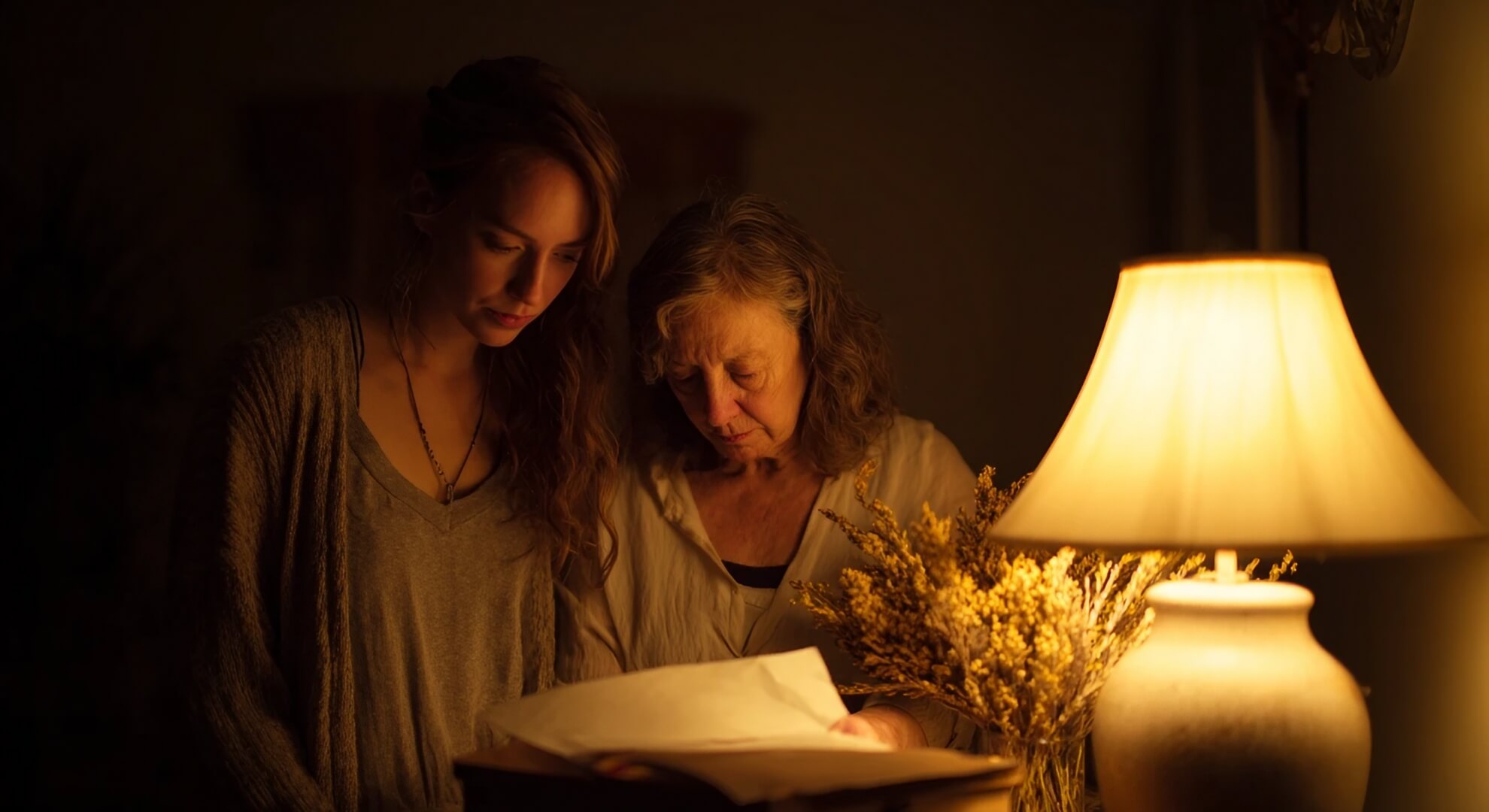


In the deep quiet that follows a last breath, families often find themselves standing at a disorienting precipice. The hands that have spent a lifetime holding, feeding, and caring suddenly have no task to perform. The caretaking role has ended abruptly, yet the energy of love remains active and demanding.
It is here that the death doula steps in—not merely to manage the logistics, but to validate a primal human impulse: the need to offer one final gift.
This desire to adorn the dead is not sentimental; it is an act of spiritual survival. The death doula invites the family to place an object into the vessel, helping them bridge the terrifying gap between the living and the dead, asserting that the relationship continues even as the form changes.
DISCLOSURE: This post contains affiliate links. When you purchase through these links, I may receive a small commission that helps me continue to provide these resources for your journey, at no extra cost to you. I only recommend resources I believe in.
Echoes of Ancient Rituals
We are not the first to feel this need, and the death doula often serves as a modern connector to these ancient instincts.
Since the dawn of consciousness, the living have adorned the dead, from Egyptian pharaohs to indigenous elders. This impulse is rooted in what Malidoma Patrice Somé describes as the vital role of ritual in processing grief.1
When a family feels unsure or foolish for wanting to tuck a blanket around a body destined for fire, the death doula reminds them that they are participating in a lineage of ritual stretching back thousands of years.
They affirm that sending our beloved on their journey with items of comfort is a universal language of honor, not a breach of protocol.
Softening the Industrial Edge
Our modern medical and funeral systems are miraculous in their efficiency, yet they can often feel sterile, clinical, and profoundly lonely.
The mechanics of the retort and the stainless steel of the preparation room can overshadow the sacred transition.
The death doula acts as a buffer against this industrial coldness, and through the simple act of encouraging the family to consciously choose items to accompany the body, the death doula helps reclaim the process from the institution.
This intervention transforms a logistical disposal into a deeply personal ceremony, softening the sharp edges of the machinery with the warmth of human touch and specific memory.
The Vessel as a Sanctuary
Left to the default settings of the industry, the cremation container is often just a cardboard box or a simple pine crate—a shipping vessel.
The death doula reframes this object, inviting the family to view it instead as a sanctuary, the final room their loved one will inhabit in this realm.
Under the death doula’s gentle guidance, the family is encouraged to “make the bed” one last time. Lining the hard bottom with a favorite quilt or arranging a pillow from home creates a boundary between the public world and the private intimacy of death.
It allows the family to care for the body in a way that feels protective and tender.
The Power of Written Words
One of the most cathartic rituals a death doula facilitates involves the written word. There are often sentiments too heavy to speak aloud, or secrets that belong only to the departed.
The death doula may suggest writing a letter—containing apologies, gratitude, or simple memories—and tucking it into the pocket of the deceased or placing it between their hands. Because paper is combustible, it is the perfect medium for the cremation chamber.
The death doula frames this act not just as writing, but as release; as the fire consumes the paper, the smoke becomes a physical manifestation of the message being carried to the spirit realm, ensuring nothing important is left unsaid.
Returning to the Earth
For those who found their church in the woods or the waves, the death doula often suggests bringing elements of the natural world into the vessel.
This might take the form of dried flower petals from a garden, a sprig of rosemary for remembrance, or a piece of driftwood. Unlike synthetic tributes, these organic materials break down in harmony with the body.2
The death doula uses these items to ground the abstract concept of death in the sensory reality of the earth, reminding the bereaved that we are all part of a natural cycle of growth, decay, and regeneration.
Artifacts of Identity
The death doula also helps the family select items that represent the unique identity of the person who has died—a worn paperback, a knitting project, or plain-paper photographs. However, this is where the death doula’s expertise is vital.
They guide the family away from dangerous items like batteries, glass, or treated glossy photos that could release harmful chemicals.
This careful selection process ensures that the artifacts serve as a spiritual identification without compromising the safety of the process.
It is a way of declaring that the deceased’s personality and passions were real, valid, and worthy of accompanying them into the fire.
The Physicality of Grief
Grief is not just an emotional experience; it is a somatic one. The body aches to do something. The death doula recognizes this and encourages the family to be physically involved.
Rather than standing back, the death doula invites them to lean over the vessel, to arrange the blanket, to tuck the photo near the face. This tactile engagement breaks the paralysis of shock.3
Guided by the death doula’s permission, the bereaved become active participants in the farewell rather than passive observers, exhausting their muscles in acts of love that help integrate the reality of loss.
A Voice For Your Sacred Intentions
While the desire to include personal items is natural, funeral homes have strict regulations that can feel intimidating to a grieving family. A request to place a personal item might be met with a bureaucratic “no” if not properly negotiated.
The death doula acts as a steadfast advocate in these moments, coordinating these delicate details directly with the funeral director. They navigate the safety standards and environmental regulations on the family’s behalf, ensuring that biodegradable tributes are accepted with dignity.
Removing this logistical friction allows the family to focus entirely on the sacred act of saying goodbye, rather than on the red tape of the process.
Fire as Transformation
The death doula helps the family understand that the items placed in the vessel are not being lost, but transmuted.
Fire is an agent of change, reducing both the biology of the body and the sentimental weight of the objects into pure elements. The death doula holds the space for this realization: that by giving these small gifts to the fire, we are trusting that the love they represent cannot be consumed, only refined.
It is the final alchemy of grief, turning heavy sorrow into light and smoke, sending love upward and outward into the universe, with the death doula standing witness to ensure no one walks this path alone.
In considering the quiet sanctity of the vessel, what cherished token would you trust to carry your story into the fire, and how might the presence of a dedicated guide reshape your fear of the unknown into a final, enduring act of love?
References:
- Somé, Malidoma Patrice. “The Healing Wisdom of Africa.” This text explores the vital role of ritual and community in processing grief and honoring the ancestors. ↩︎
- Lynch, Thomas. “The Undertaking: Life Studies from the Dismal Trade.” A poetic and pragmatic examination of the funeral profession that underscores the importance of physical rituals in processing death. ↩︎
- Wolfelt, Alan D. “Understanding Your Grief.” This guide emphasizes the necessity of mourning—the outward expression of grief—and how active participation in rituals aids healing. ↩︎
Leave a Reply