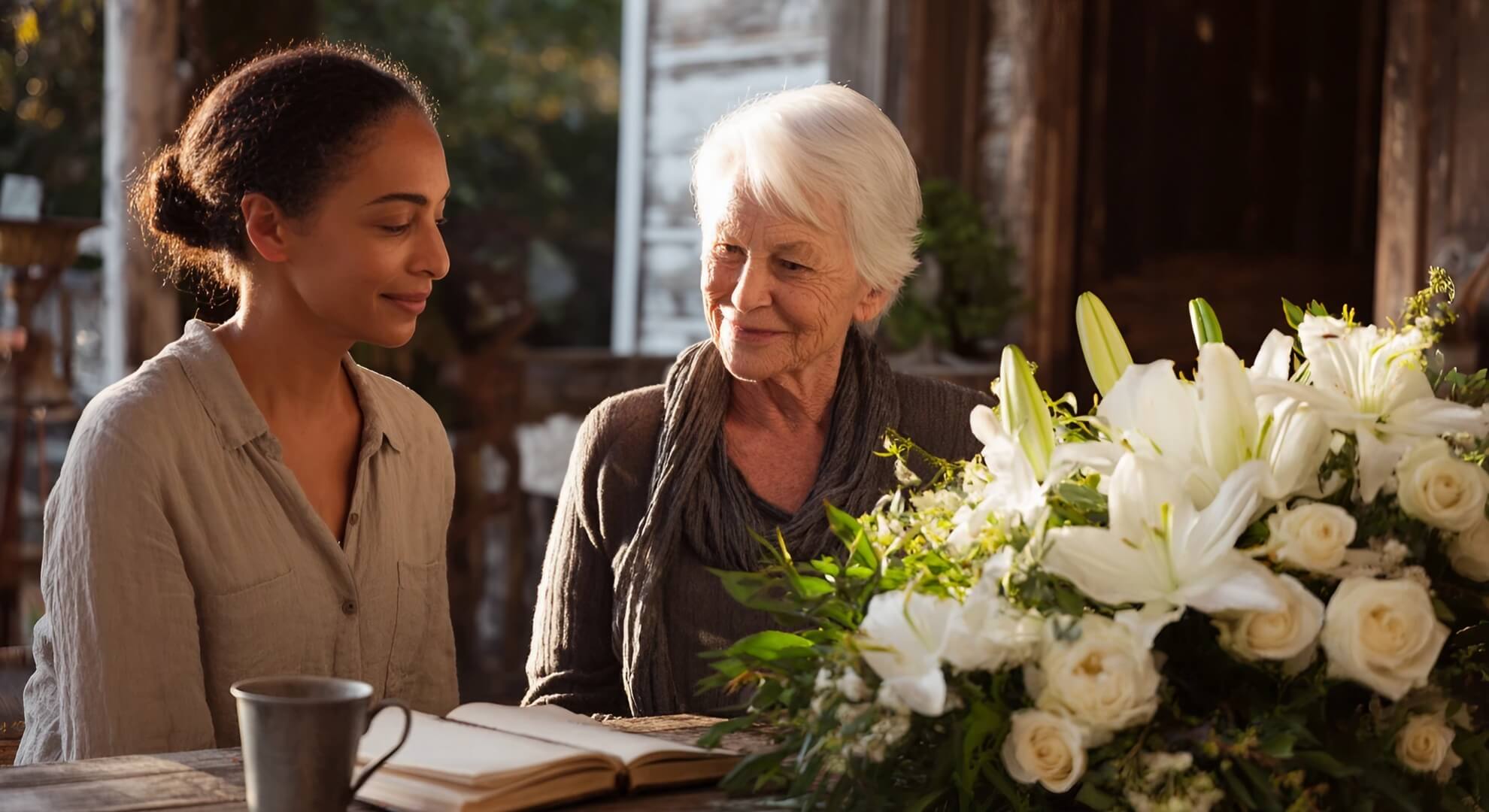


There is a specific, quiet heaviness that settles in the chest when we allow our minds to drift toward the end of our lives. It is a deeply human reflex to recoil from this horizon, to treat death as a distant abstraction that requires no immediate attention, fearing that to speak of it is to somehow invite it closer.
Yet, this silence we cultivate is rarely peaceful; instead, it often manifests as a hum of low-level anxiety that emphasizes our daily movements. We may find ourselves carrying the unspoken weight of “what if,” feeling less like the authors of our own destiny and more like passengers on a train hurtling toward a station we have not chosen.
The true narrative of end-of-life planning is not one of morbid resignation, but of profound reclamation. It is the story of moving from a place of helpless avoidance to one of empowered clarity, where we acknowledge that while we cannot control the sunset, we can absolutely decide how we wish to sit within its light.
When we begin this work, we are doing far more than organizing legal documents or medical directives. We are engaging in a form of spiritual architecture, a process often illuminated by the perspective of a death doula.
A death doula contributes to this journey by holding space for the non-medical nuances of our experience, guiding us to view our choices not as administrative tasks, but as extensions of our life’s philosophy.
This deeply personal preparation provides our loved ones with a compassionate map, not a mystery, during their most difficult time. Through crafting a final, enduring will of our values, they help ensure that our voice remains the guiding force in our own story.
This deeply personal preparation leaves our loved ones with a compassionate map, rather than a mystery, when they need it most.
DISCLOSURE: This post contains affiliate links. When you purchase through these links, I may receive a small commission that helps me continue to provide these resources for your journey, at no extra cost to you. I only recommend resources I believe in.
Finding Balance When the Ground Shifts
When we face a serious diagnosis or simply the advancing years, the ground beneath us can feel unstable. The medical system, with its complex language and relentless pace, often exacerbates this feeling of powerlessness.
It is easy to feel swept away by protocols and procedures that prioritize biological survival over personal well-being. This loss of agency is often cited as one of the most distressing aspects of the end-of-life experience.1
Planning serves as an anchor in these turbulent waters. It allows us to define what matters most to us before a crisis occurs, ensuring that our definition of “living” remains central to our care.
The Quiet Strength of Stating Your Truth
There is a profound strength found in the act of articulation. When we take the time to document our preferences for medical intervention, we are doing more than checking boxes on a legal form.
We are engaging in a deep self-reflection regarding our values. We are asking ourselves what trade-offs we are willing to make and what quality of life means to us personally.
This process transforms abstract fears into concrete choices. It allows us to speak for our future selves, ensuring that our voice remains clear and authoritative even if we can no longer speak.
Removing the Burden of Guesswork
One of the greatest gifts we can offer our loved ones is the gift of clarity. Grief is inherently disorienting, and asking grieving families to make high-stakes medical decisions in a vacuum is a heavy burden.
Without guidance, families are often haunted by doubt. They may wonder for years if they made the right choice, or if they honored the true wishes of the person they lost.2
Advanced care planning relieves our loved ones of a heavy burden. Instead of being forced to guess and manage administration, they are empowered to advocate for us with clarity and confidence, allowing them to concentrate on simply connecting with us.
Unveiling the Treasures of Memory
Preparation is not limited to medical directives and financial wills. It also involves a sorting of our internal world, a process we might call emotional archaeology. This is a space where the unique guidance of a death doula can be profoundly transformative, offering a steady hand to navigate the non-medical complexities of dying.
This involves sifting through memories, unresolved conflicts, and unspoken words with a compassionate witness. A death doula helps facilitate this work, asking the gentle, probing questions that allow us to identify what emotional legacy we wish to leave behind alongside our material possessions.
Addressing these emotional loose ends provides a sense of completion. It allows us to close the chapters of our life with intention, rather than leaving sentences unfinished, transforming a time of loss into a period of profound meaning-making.
Becoming the Steward of Your Care
Given modern healthcare’s ability to maintain biological function long after consciousness is lost, two elements become crucial: providing highly specific instructions and ensuring a well-informed advocate is present.
An advance directive is your voice in the room when you cannot be there physically. It acts as a shield, protecting your body and your dignity from interventions that you might deem unnecessary or intrusive.
Here, the death doula contributes by bridging the gap between medical protocol and personal values. They ensure that your healthcare proxy feels supported and empowered to act not just as a decision-maker, but as a defender of your stated wishes, turning a potential battleground of opinions into a sanctuary of respect.3
Defining What Endures Beyond Possessions
We often conflate legacy with the distribution of assets. While ensuring financial order is responsible, our true legacy lies in the values, stories, and wisdom we impart.
Ethical wills, or legacy letters, are a beautiful tool for this purpose. They allow us to articulate what we learned in this lifetime, what we cherished, and what hopes we hold for future generations.
This form of planning puts us in the driver’s seat of our own narrative. It ensures that we are remembered not just for what we owned, but for who we were and what we stood for.
Diffusing Fear Through Practical Action
It is a paradox of the human condition that the things we fear most tend to lose their power when we face them directly. The shadow of death looms largest when we refuse to look at it.
Instead of viewing “dying” as an overwhelming concept, we can transform end-of-life anxiety into peace by breaking down the logistics into manageable, solvable components. Engaging with these practical steps demystifies the process.4
This practical engagement can lead to a surprising reduction in anxiety. When the logistics are settled, the mind is free to focus on the emotional and spiritual dimensions of the transition.
Deepening Connection Through Honest Talk
Planning is rarely a solitary act; it invites conversation. While initiating these discussions can be daunting, they often lead to moments of profound closeness and connection.
Talking about our wishes opens a door for our loved ones to express their own fears and desires. It creates a shared reality where death is not a taboo subject but a recognized part of the family narrative.
These conversations build a bridge of understanding. They ensure that when the time comes, everyone is standing on the same side of the river, facing the horizon together.
Creating Space to Fully Inhabit the Now
There is a common misconception that focusing on death is morbid or depressing. On the contrary, acknowledging our mortality is often what gives life its vibrancy and urgency.
When we have addressed the “business” of dying, we are liberated to fully inhabit our living. We no longer carry the low-level stress of procrastination or the fear of the unprepared disaster.
We can savor our morning coffee, the laughter of a grandchild, or the beauty of a sunset with a lighter heart. We know that we have done the work required to protect our future and our family.5
A Final Embrace of Those We Leave Behind
End-of-life planning is, at its core, an act of love. This protective measure extends beyond our lifetime, offering peace of mind that our families will be looked after even after we are gone.
It is the final assertion of our character. It declares that we matter, that our choices matter, and that we respect the dignity of our own life enough to curate its conclusion.
Taking control allows us to navigate our final journey with grace, ensuring our departure reflects our unique spirit just as profoundly as our arrival and the life we lived.
The Serenity of a Path Prepared
Reclaiming control through end-of-life planning is a journey from anxiety to agency. It asks us to be courageous, to look at the horizon with clear eyes, and to make decisions that honor our authentic selves.
This process is not merely about paperwork; it is a spiritual and emotional clearing that allows us to live our remaining days with a profound sense of peace.
When we have tidied the house of our life, we are free to sit on the porch and simply watch the sunset, knowing that we have done all we can to smooth the path for ourselves and those we love.
References:
- Volandes, Angelo. “The Conversation: A Revolutionary Plan for End-of-Life Care.” A physician’s urgent call to empower patients with the knowledge and agency to make informed decisions about their own medical treatment. ↩︎
- Dunn, Hank. “Hard Choices for Loving People.” A compassionate guide that helps families navigate the difficult decisions surrounding life-sustaining treatments and palliative care with clarity and love. ↩︎
- Tisdale, Sallie. “Advice for Future Corpses (and Those Who Love Them).” A practical, witty, and deeply humane look at the logistics of death that encourages preparation as a form of caretaking. ↩︎
- Singh, Kathleen Dowling. “The Grace in Dying.” An insightful exploration of the psychological and spiritual transformations that occur during the dying process, helping to demystify the experience. ↩︎
- Karnes, Barbara. “The Final Act of Living.” A gentle and knowledgeable guide from a pioneer in the hospice movement that normalizes the dying process, offering comfort and understanding to those facing the end of life. ↩︎
Leave a Reply