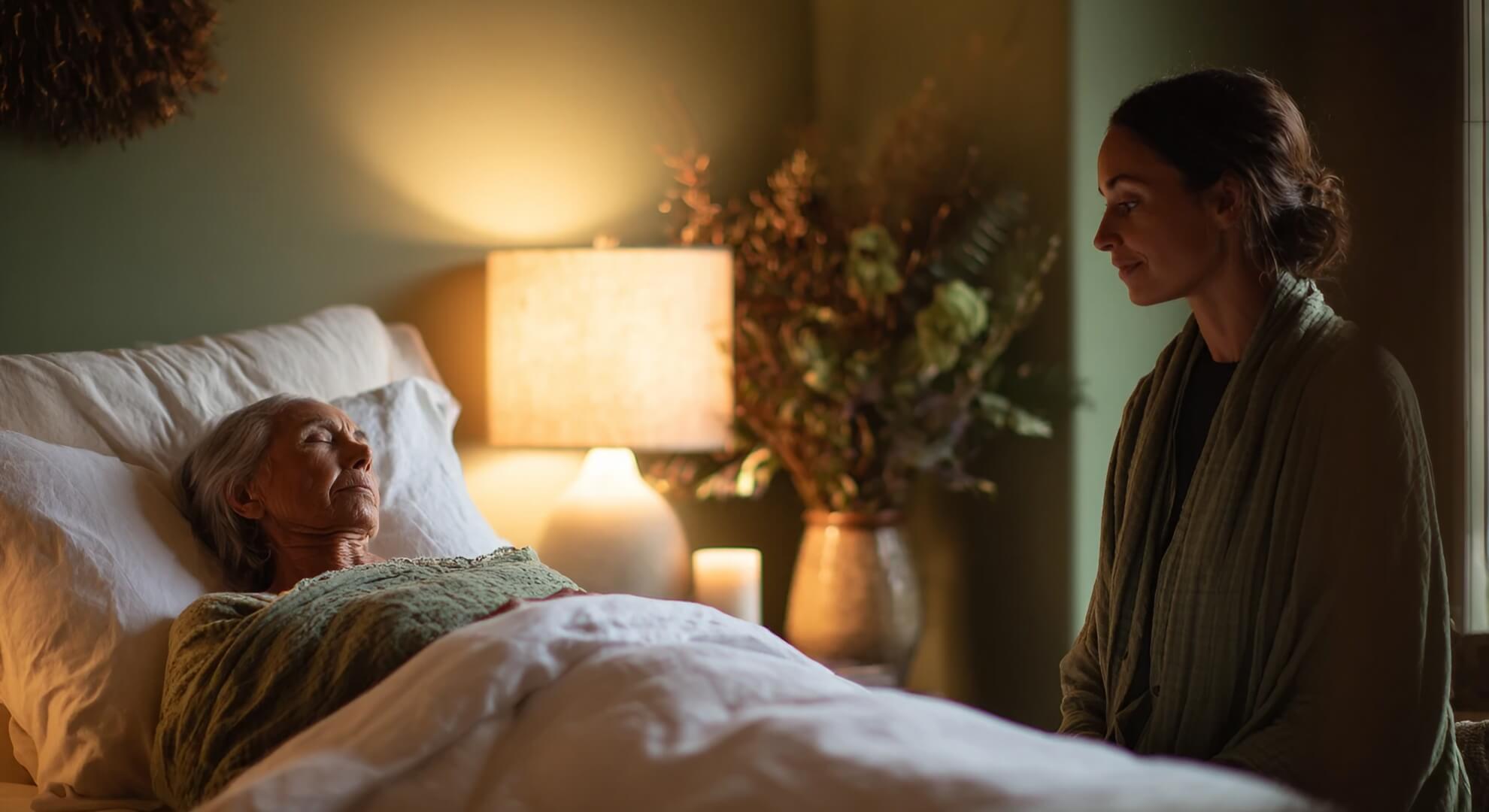


There is a quiet, unspoken terror that resides deeply within the human heart. It is the fear of reaching the very end of one’s earthly journey and finding oneself completely alone.
You are not weak for harboring this anxiety; it is a profoundly natural response to the ultimate unknown. For centuries, passing away was a communal event, surrounded by kin and neighbors.
Today, the modern medical environment often isolates the dying, reducing a sacred transition to a clinical event behind closed doors.
The dread of drawing a final breath in an empty, sterile room is a valid psychological burden that many individuals carry as they contemplate their mortality.
We must acknowledge this fear with gentle honesty if we are to address it effectively.1
DISCLOSURE: This post contains affiliate links. When you purchase through these links, I may receive a small commission that helps me continue to provide these resources for your journey, at no extra cost to you. I only recommend resources I believe in.
Understanding Final Solitude
To comprehend why isolation at the end of life feels so daunting, we must recognize that human beings are fundamentally relational creatures. We understand our existence through the reflections of those around us.
When the physical body begins its process of shutting down, the world can feel incredibly distant. The fading of the senses can induce a profound feeling of separation.
Having a steadfast presence by the bedside provides a vital tether to the world of the living. Without that connection, the journey into the unknown can feel like drifting untethered into an abyss.
This solitude is not merely a physical absence; it is a spiritual starvation at the exact moment when the soul requires maximum comfort.
The Embrace of a Continuous Vigil
In response to this profound human need, a deeply intentional approach has emerged to safeguard the dying from isolation. Establishing a continuous vigil is meticulously designed to ensure that the final transition is met with unwavering support and companionship.
It acts as a comprehensive embrace for the end of life, organizing resources, personnel, and environmental elements to create a sanctuary of peace.
Outlining specific wishes for the final days and hours removes the chaos and uncertainty that often accompany the active dying phase.
It is a proactive declaration that one’s final moments will be respected, cherished, and shared, rather than left to chance or institutional routine.
A Vow of Unwavering Companionship
At the core of this end-of-life preparation is a powerful, intentional vow. It is a profound commitment ensuring that when the time comes, a compassionate human hand will be holding yours.
This is not a vague aspiration; it is a sacred agreement offering unbroken companionship.
Establishing this arrangement provides individuals with deep peace of mind, securing the absolute certainty that they will not slip away unnoticed.
Elevating the concept of presence from a hopeful wish to a steadfast reality serves as a profound psychological anchor.
Knowing that a dedicated individual is devoted entirely to standing watch over your final hours transforms anxiety into serene acceptance.2
The Steadfast Presence of the Death Doula
The individuals who fulfill this sacred promise are known as death doulas. A death doula acts as an emotional, spiritual, and practical companion during the transition of dying.
Unlike medical personnel, whose primary focus is the physiological management of the body, the death doula focuses entirely on the comfort and holistic well-being of the person.
They are trained to sit comfortably in the presence of mortality without seeking to cure or fix the natural process.
The death doula brings a deep well of empathy, steadying the emotional atmosphere of the room. They serve as a calm, validating mirror, reflecting dignity back to the individual who is passing away.
A Symphony of Senses at the Bedside
During the active dying phase, verbal communication often ceases, and the individual retreats deeply inward.
A dedicated vigil ensures that this silent phase is still filled with profound connection through sensory engagement.
The death doula provides continuous, gentle physical touch, which is known to be the most enduring sense. A softly held hand or a soothing stroke on the forehead communicates safety when words fail.
Furthermore, the death doula curates an auditory environment tailored to the individual’s history, playing cherished music, reading beloved texts, or simply humming a calming melody.
This sensory symphony anchors the individual, ensuring that the individual feels warmth, reverence, and profound love rather than cold clinical silence.
Care Across the Threshold
The commitment to unbroken presence requires meticulous logistical coordination. Dying does not adhere to a schedule, and the active phase can span hours or even days.
To guarantee that the individual is never left alone, this approach often incorporates a team of death doulas working in carefully coordinated shifts. This ensures twenty-four-hour, seven-days-a-week coverage at the bedside.
As one death doula rests, another takes up the vigil, passing the torch of compassionate attention seamlessly.
This continuity of care is vital; it means that in the quiet hours of the deep night, when fears often peak, there is always a wakeful, attentive companion keeping watch.
Providing Relief to Distant Loved Ones
This steadfast companionship also offers immense solace to the wider circle of family and friends.
In our highly mobile society, children and relatives often live across the country or around the globe, making it impossible for them to maintain a constant bedside presence.
The agonizing guilt of not being there for a parent or loved one’s final breath can haunt families for generations. The unwavering certainty of a death doula relieves this heavy burden.
Relatives can find deep comfort in knowing that their beloved is being attended to with grace and tenderness by a skilled professional.
It allows families to grieve and process the loss without the compounding trauma of knowing their loved one died in isolation.
Reclaiming the Dignity of the Dying Process
A thoughtfully prepared vigil actively reclaims the inherent dignity of the dying process through the assurance of a dedicated, compassionate presence.
It shifts the narrative from one of medical failure to one of a natural, sacred transition.
When an individual is surrounded by intentional care, gentle touch, and soothing sounds, they are affirmed as a person of immense value right up to their final heartbeat.
This approach resists the societal tendency to turn away from death. Instead, it moves deliberately toward it, illuminating the shadows with human warmth.
It is a profound act of rebellion against a culture that often discards the dying, asserting instead that every life deserves an honorable and witnessed conclusion.
A Shared Humanity in Our Final Moments
The assurance of a continuous vigil speaks to the deepest truths of our shared human condition.
We enter this world reliant on the care and touch of others, and it is beautifully fitting that we should depart it in the same manner.
You are deeply worthy of companionship at the end of your days. The presence of a death doula is a profound reminder that we belong to one another, inextricably bound by the common thread of mortality.
When you face the final threshold, you will do so with a steady hand in yours, surrounded by an atmosphere of profound respect.
This is our ultimate promise: you will be seen, you will be held, and you will not walk into the great unknown alone.3
How might your own final hours be transformed by the presence of a dedicated companion, and what sensory comforts would you most wish to surround you as you cross the ultimate threshold?
References:
- Ariès, Philippe. “The Hour of Our Death.” A profound historical analysis tracing how human societies have understood, ritualized, and eventually feared the dying process over a millennium. ↩︎
- Kellehear, Allan. “A Social History of Dying.” An academic exploration of the ways in which cultural shifts have transformed the experience of passing away from a communal event to a medicalized occurrence. ↩︎
- Wyatt, Karen. “What Really Matters.” A spiritual exploration drawn from hospice experiences that illuminates the profound lessons the dying impart to those who sit quietly beside them. ↩︎
Leave a Reply